A clearer picture of your water.

Follow the water-quality measurements that matter to your site, from building supply systems to treatment and distribution facilities.

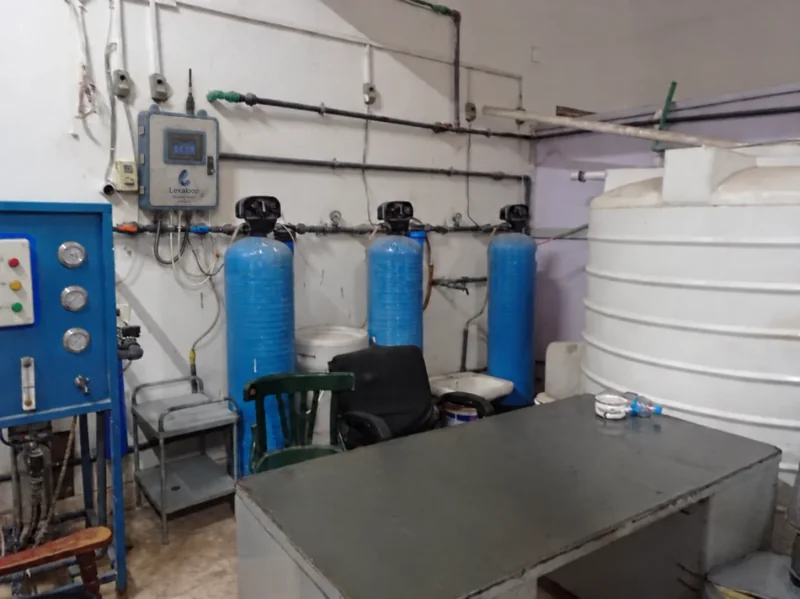
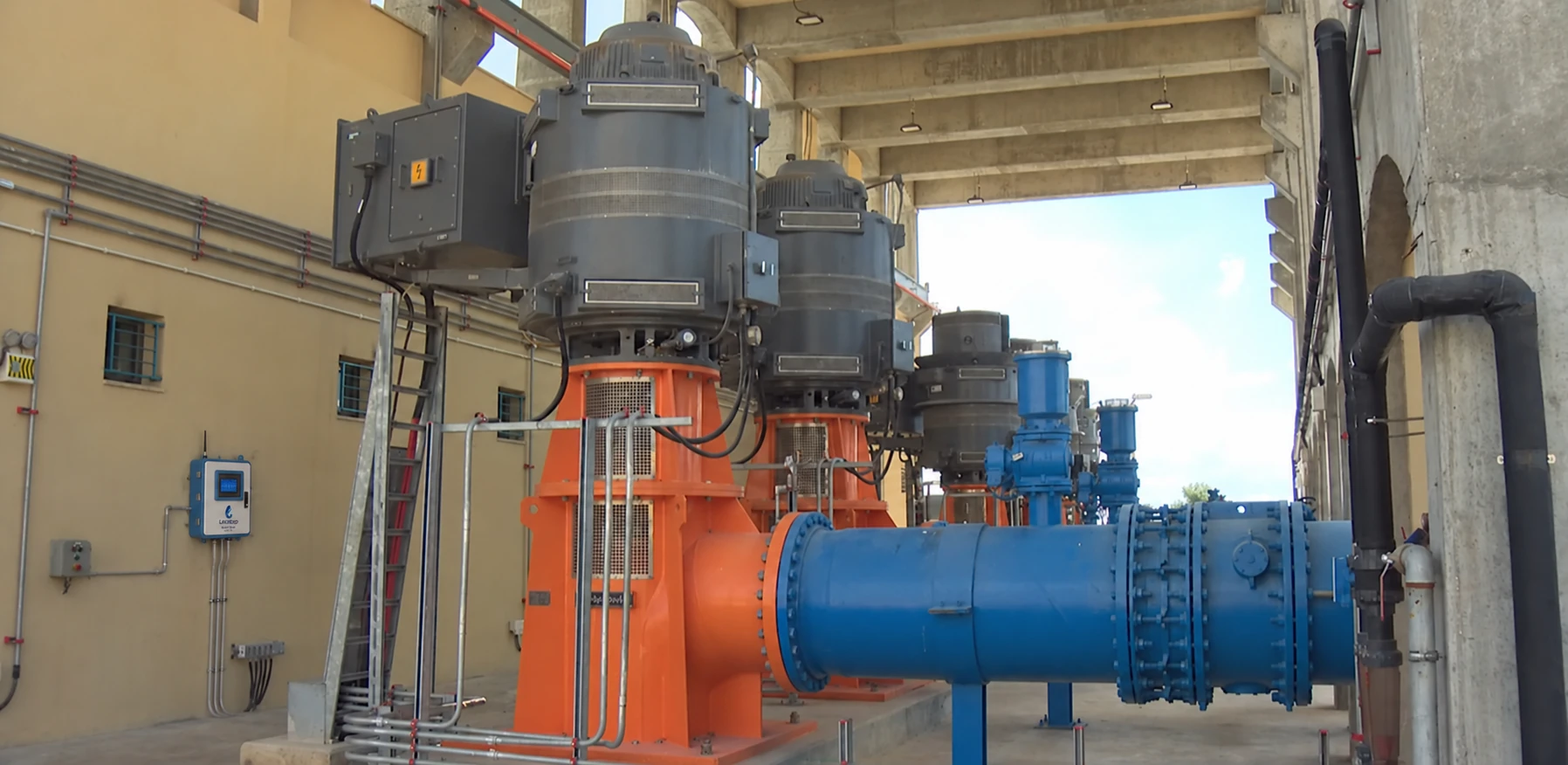
Water-treatment pumping hall with orange pumps, blue pipework and a Lexaloop WaterQ Basic analyzer digitally added to the left wall
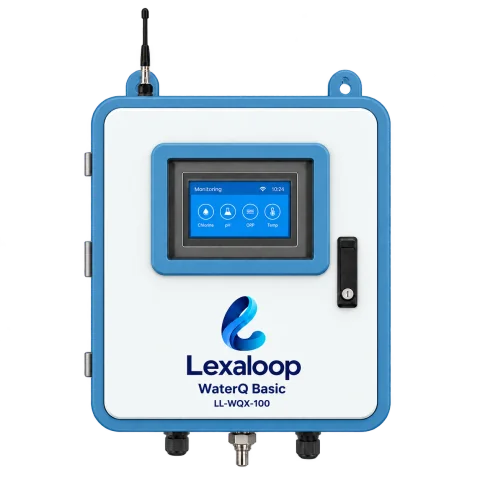
WaterQ Basic LL-WQX-100
Monitoring scope
  • pH
  • ORP
  • Residual chlorine
  • Conductivity
  • TDS
  • Salinity
  • Temperature

The seven measurements above describe WaterQ Basic. Pro measurement channels and external sensors are selected for the project.

Two device options.
Choose your capability.

Start with seven core readings, or choose Pro for more measurement choices and external sensor inputs.

Option 1

WaterQ Basic

LL-WQX-100

Seven core measurements.
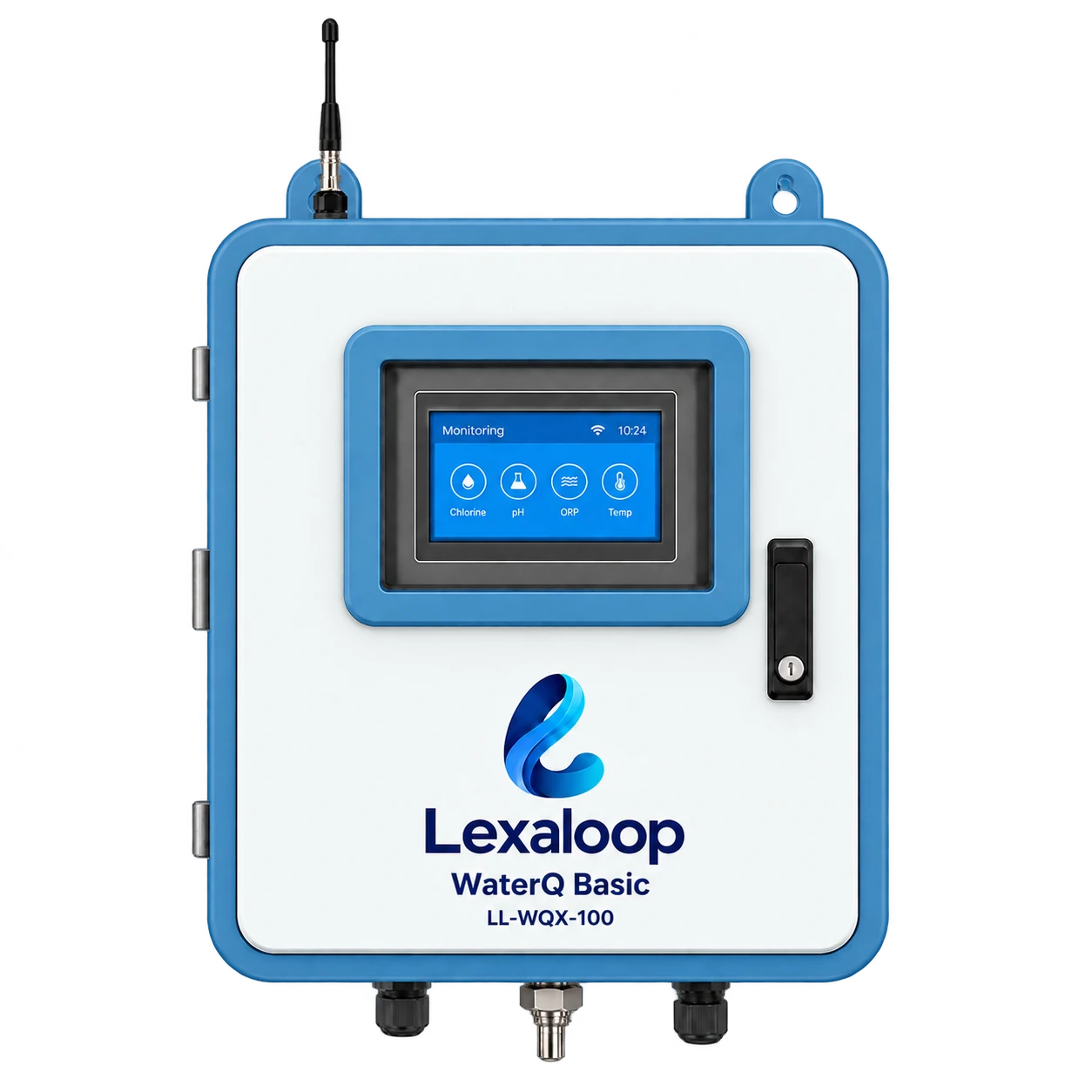
Lexaloop WaterQ Basic — LL-WQX-100; Lexaloop product visualization
Product illustration
Core water chemistry
pH, ORP, residual chlorine, conductivity, TDS, salinity and temperature.
7-inch touchscreen
Review the readings at the analyzer.
Connected monitoring
4G and RS485 / Modbus connectivity.
Wall-mounted format
A compact cabinet for a dedicated sampling point.
Full specifications
Display
7-inch color touchscreen
Connectivity
4G; RS485 / Modbus
Dimensions
470 × 580 × 185 mm
Power
100–240 V AC, 50/60 Hz
Sample flow
500–1000 mL/min; 700 suggested
Device operating temperature
−5 to 45 °C

This is the branded Basic monitoring configuration. Turbidity and dissolved oxygen are not included in its supplied seven-parameter datasheet.
Download LL-WQX-100 datasheet
Option 2

WaterQ Pro

LL-WQX-200

More measurement choices. More room to expand.

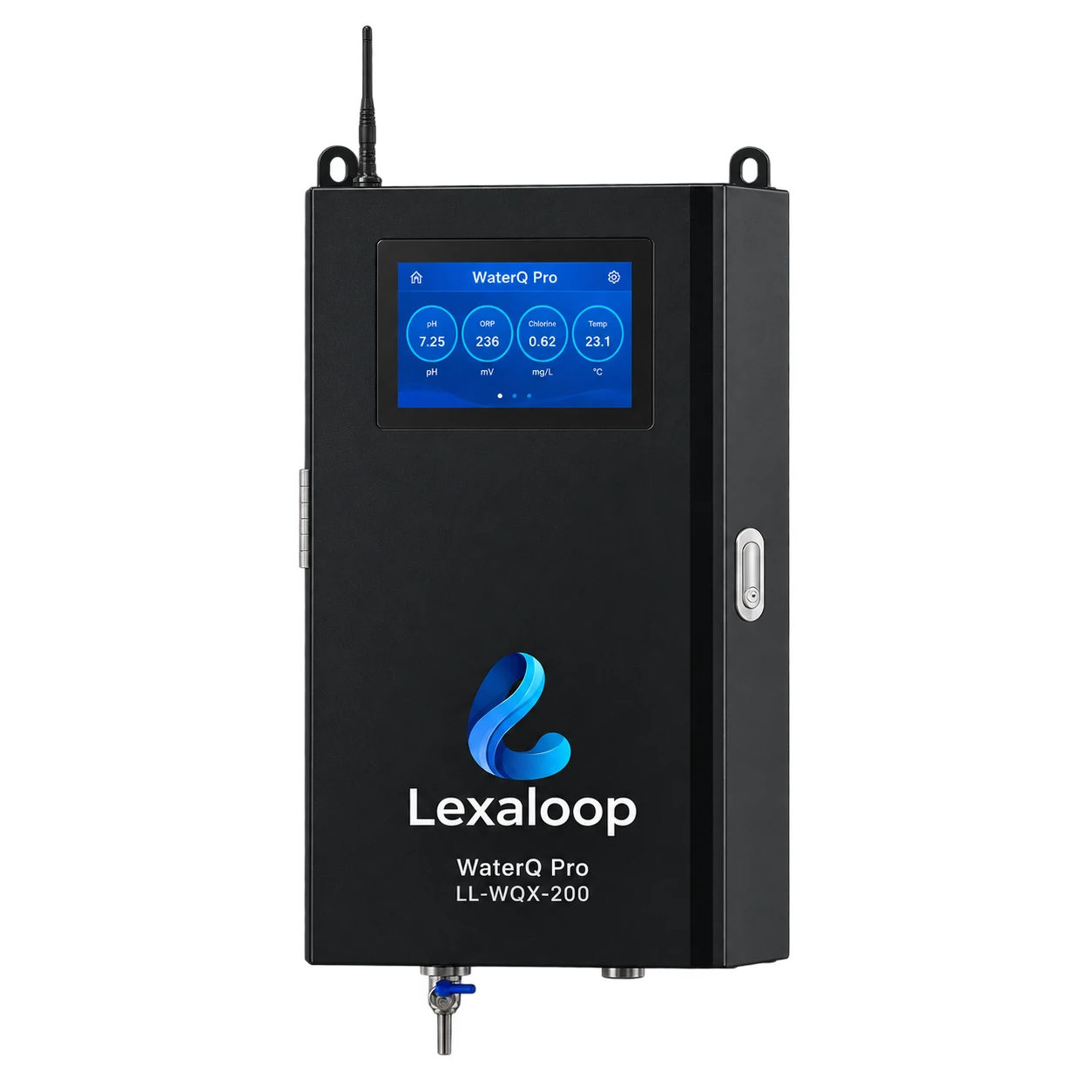
Lexaloop WaterQ Pro — LL-WQX-200; Lexaloop product visualization
Product illustration
Additional measurement choices
Specify turbidity and dissolved oxygen alongside selected chemistry channels.
Larger 10-inch touchscreen
More display space than the 7-inch screen on Basic.
External sensor inputs
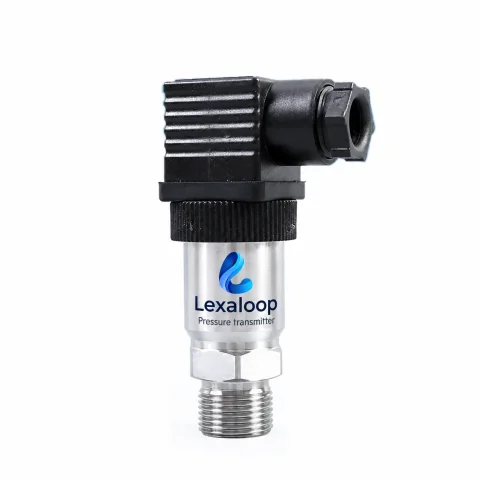
Connect compatible flow, level and pressure sensors, specified separately.
304 stainless-steel housing
A larger cabinet for the configurable Pro analyzer.
Full specifications
Display
10-inch color touchscreen
Connectivity
4G; RS485 / Modbus
External sensor inputs
Flow, level and pressure
Dimensions
500 × 800 × 205 mm
Housing
304 stainless steel
Power
100–240 V AC, 50/60 Hz

Pressure and level require separate compatible sensors. Optional measurement channels, interface compatibility and accessories must be specified for the project.

Download LL-WQX-200 specifications

Pro measurement channels are selected for each project. External flow, level and pressure sensing requires separate compatible sensors. Both devices support 4G and RS485 / Modbus.

Discuss your configuration

From the site map.
To the next action.

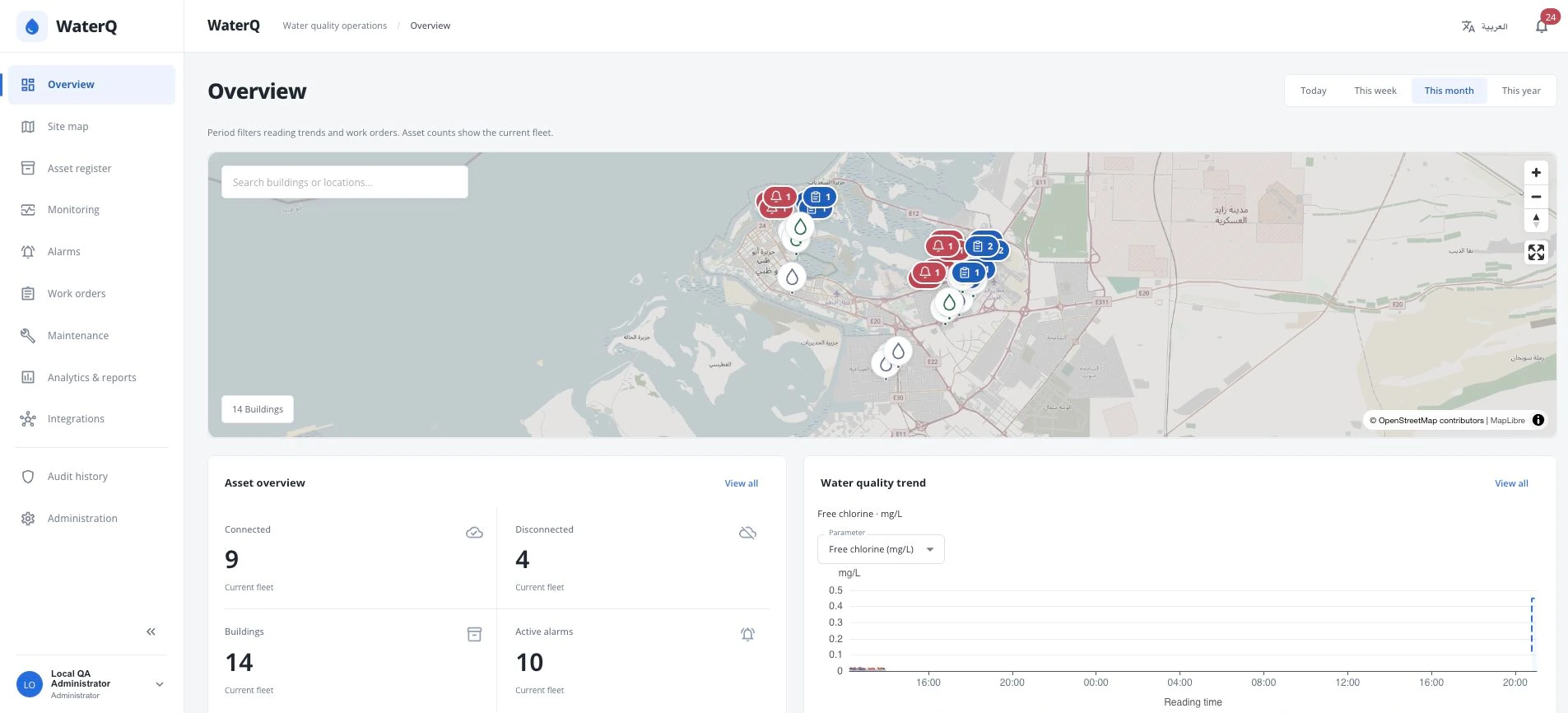
See your sites, device connectivity, water-quality trends and work orders in one operational overview.

Operations overviewView full screenshot
Actual WaterQ overview with expanded navigation, site map, connection status and water-quality trend
Actual WaterQ interface · Demonstration environment

Locate and monitor

See sites on the map alongside device connectivity and active alarm counts.

Follow the readings

Choose a parameter and period to review water-quality trends.

Track the response

Review work orders by site, priority and status to keep the next action visible.

Every reading.
A little more clarity.

Explore the seven measurements in the LL-WQX-100. Select a parameter to see what it tells you.

/ Measurement explorerIllustrative data

pH

Example reading

7.24pH

See how acidity and alkalinity change at your sampling point.

Illustrative pH readings between 7.12 and 7.27 pH, ending at 7.24. Not live data.7.277.1208:0009:0010:00
Instrument range 0–14 pHLL-WQX-100

Residual chlorine

Example reading

0.62mg/L

Follow the disinfectant reading alongside the other water-quality measurements.

Illustrative Residual chlorine readings between 0.56 and 0.64 mg/L, ending at 0.62. Not live data.0.640.5608:0009:0010:00
Instrument range Up to 20 mg/LLL-WQX-100

ORP

Example reading

310mV

Track oxidation-reduction potential as part of the overall water-chemistry picture.

Illustrative ORP readings between 295 and 316 mV, ending at 310. Not live data.31629508:0009:0010:00
Instrument range ±2000 mVLL-WQX-100

Conductivity

Example reading

640µS/cm

Observe changes in electrical conductivity at the same sampling point.

Illustrative Conductivity readings between 610 and 648 µS/cm, ending at 640. Not live data.64861008:0009:0010:00
Instrument range Up to 20,000 µS/cmLL-WQX-100

TDS

Example reading

320mg/L

Keep the total dissolved solids reading in view with the rest of your measurements.

Illustrative TDS readings between 305 and 324 mg/L, ending at 320. Not live data.32430508:0009:0010:00
Instrument range Up to 10,000 mg/LLL-WQX-100

Salinity

Example reading

0.32psu

Follow the salinity reading over time without switching to a separate instrument view.

Illustrative Salinity readings between 0.29 and 0.33 psu, ending at 0.32. Not live data.0.330.2908:0009:0010:00
Instrument range 0–13 psuLL-WQX-100

Temperature

Example reading

24.6°C

Read the water temperature alongside its chemistry to give each measurement context.

Illustrative Temperature readings between 23.8 and 24.7 °C, ending at 24.6. Not live data.24.723.808:0009:0010:00
Instrument range −5 to 60 °CLL-WQX-100

Interactive illustration, not a live dashboard. Instrument ranges are not water-quality limits. Site thresholds and monitoring requirements are agreed separately.

From your water.
To your next decision.

1

Sample at the source

Choose a representative point in the water system. Plan the sample feed, drain and service access before installation.

2

Bring readings together

The analyzer brings the selected measurements to its local touchscreen. Probe selection and calibration follow the agreed configuration.

3

Connect the next step

Use the specified 4G or RS485 / Modbus connection to bring readings into the agreed monitoring setup.

Sample water

A representative sampling point

Flow and drainage agreed for the site

WaterQ analyzer

One local instrument view

Seven parameters with WaterQ Basic

Connected monitoring

A view beyond the plant room

Connectivity and integration specified per project

Illustrative system arrangement. Final connections depend on the site.

LL-WQX-100

WaterQ Basic · Basic monitoring

Lexaloop WaterQ Basic LL-WQX-100 analyzer
  • Defoaming and stabilizing flow tank
  • Reagent-free digital disinfectant sensing
  • 4G module and Water Quality Platform
  • RS485 interface with Modbus protocol
Download full datasheet
Cabinet size470 × 580 × 185 mmWidth × height × depth
Power supply100–240 V AC50/60 Hz
Sample flow500–1000 mL/min700 mL/min suggested
Operating temperature−5 to 45 °CDevice operating conditions
Measurement ranges & accuracy

Scroll across to compare all columns.

Measurement performance from the LL-WQX-100 datasheet
ParameterRangeAccuracyResolution
Residual chlorine / disinfectant sensor*20 mg/L±5% or ±0.05 mg/L, whichever is greater0.001 mg/L
pH0–14±0.10.01
ORP±2000 mV±20 mV±1 mV
Conductivity20,000 µS/cm (conventional)1% F.S.1 µS/cm
TDS10,000 mg/L (conventional)1% F.S.1 mg/L
Salinity0–13 psu1% F.S.0.01 psu
Temperature−5 to 60 °C±0.5 °C0.1 °C

*Digital disinfectant sensor: CL / TC / ClO₂ / O₃, as listed in the datasheet. Accuracy for pH, ORP, conductivity, TDS, and salinity is based on standard solution. F.S. means full scale.

Installation & system requirements
Installation
Wall-mounted
Dimensions
470 × 580 × 185 mm (W × H × D)
Housing
Plastic-coated galvanized sheet; 304 stainless steel optional
Display
7-inch color touchscreen
Power
100–240 V AC, 50/60 Hz
Digital output
RS485 interface, Modbus protocol
Operating temperature
−5 to 45 °C
Sample flow
500–1000 mL/min; 700 mL/min suggested
Inlet pressure
0.6 MPa
Sample inlet
Ø6 mm quick-plug connection
Sample outlet
Ø20 mm outer-diameter PVC pipe
Measurement methods
Digital disinfectant sensor
Reagent-free, electrochemical, three-electrode amperometry system
pH / ORP
Electrochemical method (electrode method)
Conductivity / TDS
Conductivity cell method with automatic temperature compensation
Temperature
Thermistor method

Source: LL-WQX-100 technical datasheet, updated 19 October 2026. Specifications may change.

Plan the
installation.

The details that help us select a practical configuration.

  • Identify the water source and sampling location.
  • Select Basic or Pro, then confirm the required parameters, ranges and any external sensors.
  • Provide a wall-mounting location, sample line, drain, power and connectivity.
Lexaloop product specifications

Reviewed 22 October 2026. Specifications and compatibility are confirmed for the final configuration.

Download LL-WQX-100 datasheet Download LL-WQX-200 specifications

Start with your site.

Tell us what you need to monitor. We’ll help define the sensors, installation and next steps.

Discuss your solution